
Spray Foam Insulation: The 2025 Homeowner’s Truth (Open vs. Closed Cell)
If fiberglass is the reliable sedan of the insulation world, spray foam is the high-performance sports car. It’s faster, tighter, and significantly more expensive—but does it actually drive better?
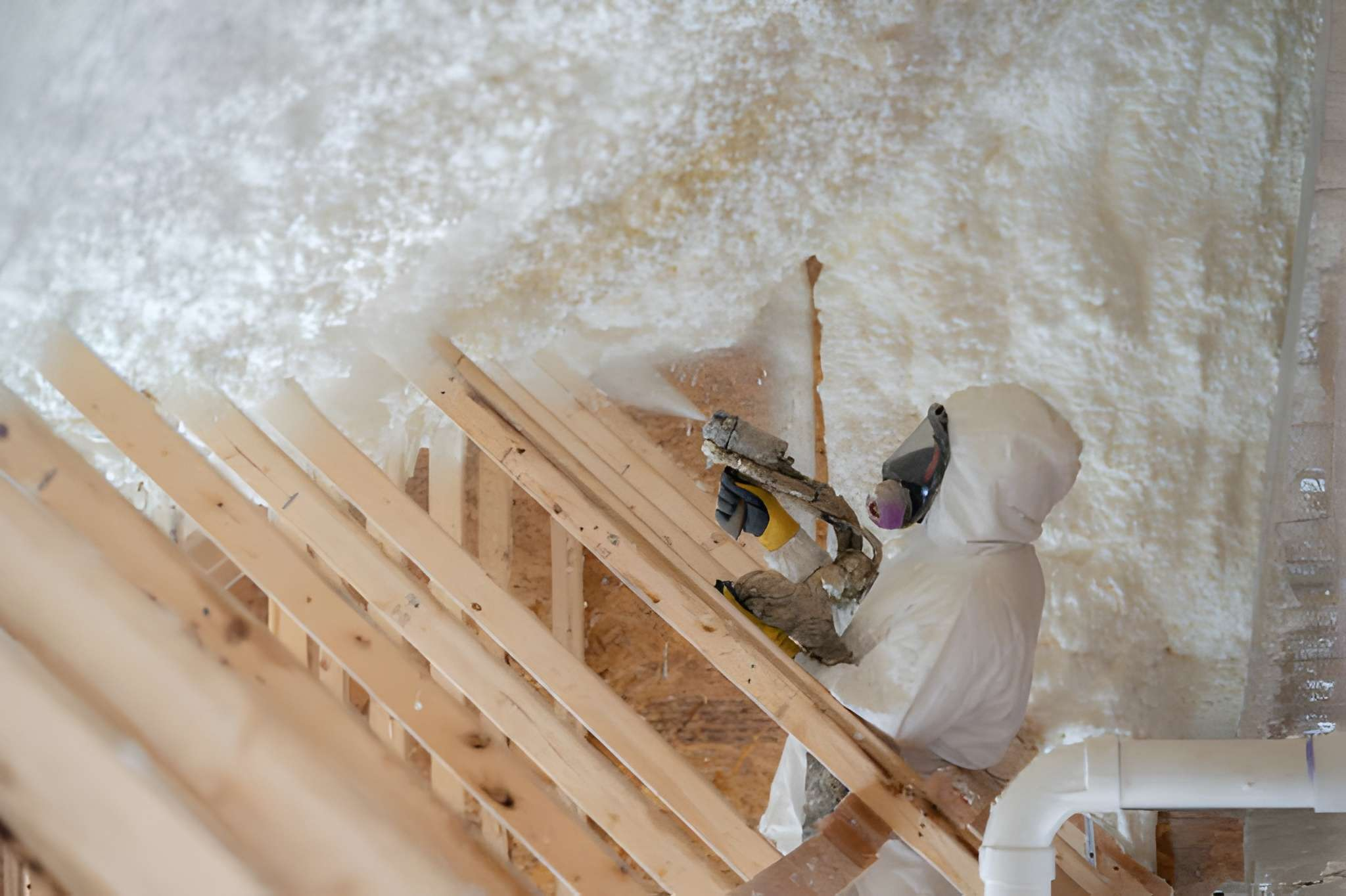
In 2025, as New York energy codes tighten and extreme weather becomes the norm, Spray Polyurethane Foam (SPF) has moved from a niche commercial product to a residential standard. It promises what no other insulation can: a complete, airtight seal in a single application.
But with high costs and internet horror stories about “off-gassing,” is it the right choice for your family?
This guide cuts through the sales pitches to give you the unvarnished truth about spray foam insulation, its safety profile, and how to leverage the 2025 Inflation Reduction Act to make it affordable.
What Exactly Is Spray Foam?
At its core, SPF is a chemical engineering marvel. It is created on-site by mixing two liquids—Side A (isocyanates) and Side B (polyol resin)—in a high-pressure gun. When these two meet, they react instantly, expanding 30 to 100 times their liquid volume to fill every crack, crevice, and void in your wall cavity.
This expansion is the “secret sauce.” Unlike fiberglass batts that can leave gaps around wires and outlets (leading to drafts), spray foam forms a continuous thermal blanket.
Choose the Right Spray Foam in 2025 – Get Expert Help Free!
Compare open-cell (soundproofing champ, R-3.5–3.8/inch, budget-friendly) vs. closed-cell (double R-value, waterproof barrier, ideal for NY exteriors/attics) in this honest 2025 guide. Seal air leaks for up to 40% less energy loss, quieter homes, and HVAC savings – claim 30% tax credits (up to $1,200) on materials. Pro install only to avoid risks like off-gassing or poor performance. For NY homes, pair spray foam with free upgrades: schedule a NO-COST in-home energy assessment from the New York Weatherization Program to evaluate options, check incentives, and maximize comfort/efficiency today!
The Great Debate: Open-Cell vs. Closed-Cell
Not all foam is created equal. The biggest decision you will make is choosing between Open-Cell and Closed-Cell foam. They are chemically similar but behave very differently.
| Feature | Open-Cell Foam | Closed-Cell Foam |
| Structure | Soft, sponge-like | Rigid, hard plastic-like |
| R-Value per Inch | R-3.5 to R-3.8 | R-6.5 to R-7.0 (Superior) |
| Water Barrier | No (allows water to pass) | Yes (waterproof) |
| Air Barrier | Yes | Yes |
| Expansion | 100x (High expansion) | 30x (Dense expansion) |
| Best Use | Soundproofing, interior walls | Basements, attics, exterior walls |
| 2025 Cost | $1.00 – $1.50 / sq. ft. | $2.80 – $4.50 / sq. ft. |
The Verdict for New York:
In our climate (Zones 4, 5, & 6), Closed-Cell is generally superior for exterior walls and rooflines because it acts as a vapor barrier and packs nearly double the R-value per inch. Open-cell is excellent for soundproofing between floors but risky for unvented attics due to potential moisture retention.
The “Superpower”: Why Homeowners Pay the Premium
Why spend 300% more than fiberglass? One word: Air Sealing.
The U.S. Department of Energy estimates that up to 40% of home energy loss is due to air leakage—drafts coming in through outlets, soffits, and sill plates.
-
Fiberglass filters air (like a wool sweater). It slows heat but doesn’t stop airflow.
-
Spray Foam stops air dead. It seals the building envelope so tight that many modern homes require mechanical ventilation (ERVs) just to bring fresh air in.
This results in a home that isn’t just warmer, but quieter and less dusty.
The “Dark Side”: Risks & Safety (EEAT Compliance)
We believe in “User First” content, which means discussing the risks that contractors often gloss over.
1. Off-Gassing and Safety
During installation, SPF releases Volatile Organic Compounds (VOCs).
-
The Rule: You, your children, and your pets must vacate the home during spraying and for 24-48 hours afterward.
-
The Reality: Once cured (hardened), the foam is inert and safe. The “fishy smell” horror stories usually stem from improper mixing ratios (off-ratio foam). This is why hiring a certified professional is non-negotiable.
2. Permanent Commitment
Unlike batts, which can be pulled out, spray foam adheres to the wood. Removing it is a nightmare that involves scraping and wire-brushing. You are marrying this insulation to your house.
3. The DIY “Froth Pak” Trap
You will see DIY spray foam kits at big-box stores.
-
Our Advice: Use these ONLY for small rim joists or sealing gaps. Do not attempt to insulate a whole wall with DIY kits. The nozzle pressure is often inconsistent, leading to poor mixing and uncured, smelly foam.
Choose the Right Spray Foam in 2025 – Get Expert Help Free!
Compare open-cell (soundproofing champ, R-3.5–3.8/inch, budget-friendly) vs. closed-cell (double R-value, waterproof barrier, ideal for NY exteriors/attics) in this honest 2025 guide. Seal air leaks for up to 40% less energy loss, quieter homes, and HVAC savings – claim 30% tax credits (up to $1,200) on materials. Pro install only to avoid risks like off-gassing or poor performance. For NY homes, pair spray foam with free upgrades: schedule a NO-COST in-home energy assessment from the New York Weatherization Program to evaluate options, check incentives, and maximize comfort/efficiency today!
2025 Cost Breakdown & Financial Incentives
Let’s talk numbers. In 2025, insulating a 1,000 sq. ft. attic floor with Closed-Cell foam can cost between $3,000 and $5,000.
However, you can significantly offset this:
The 25C Tax Credit (Inflation Reduction Act)
The federal government wants you to choose energy-efficient materials.
-
The Deal: You can claim 30% of the material cost (up to $1,200 annually) as a tax credit.
-
The Catch: This applies to the materials only, not the labor. Since spray foam quotes are usually “labor included,” ask your contractor to itemize the material cost on your invoice so you can claim the credit.
For more on navigating these incentives and how they apply to your specific renovation, visit our resource center at nyweatherizationprogram.com.
Is Spray Foam Right for Your New York Home?
Yes, if:
-
You are converting an attic into a living space (cathedral ceiling) and have limited space for insulation depth.
-
You have a damp basement (Closed-cell is waterproof).
-
You want to maximize the lifespan of your HVAC system by reducing its load.
No, if:
-
You are on a tight budget (Fiberglass or Cellulose is far cheaper).
-
You have an old home with knob-and-tube wiring (foam cannot cover this safely).
-
You are planning major electrical or plumbing renovations soon (foam makes fishing wires difficult).
If you are unsure where spray foam fits into your overall energy plan, compare it directly with other materials in our Ultimate Guide to Home Insulation: Comfort, Savings, and Efficiency in 2025.
Conclusion
Spray foam is the gold standard for performance, offering R-values and air sealing that traditional materials simply cannot touch. But it requires a higher budget and a higher tolerance for strict installation safety protocols.
In 2025, the smart homeowner doesn’t just ask “how much does it cost?” but “how much will it save?” With spray foam, the upfront pain often leads to decades of lower bills and a home that feels solid, quiet, and comfortable.


